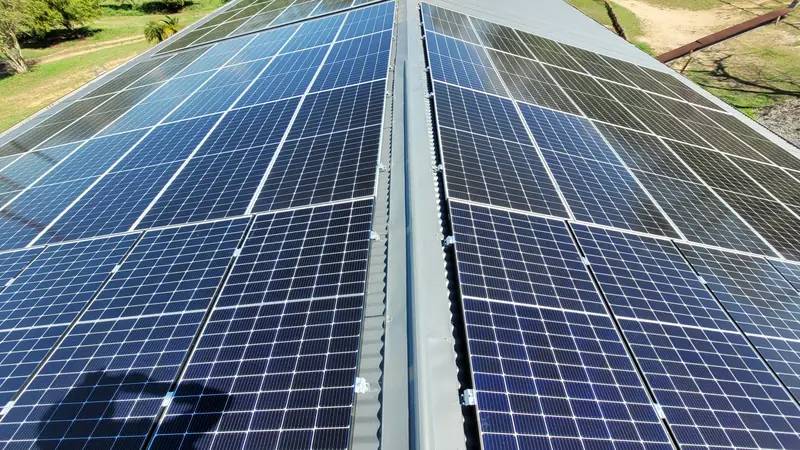
Big flat or metal roofs, long daylight operating hours and shared costs make strata buildings, warehouses, shops and offices strong candidates for solar. The difference from a house is mostly the process: who has to approve it, whose meter the power goes to, and what the roof and network need. Get those right early and the install itself is the easy part.
Strata buildings: who owns the roof?
In a strata scheme, the roof is almost always common property, which belongs to the owners corporation rather than any single owner. That means solar on the roof normally needs approval from the owners corporation, typically through a resolution at a general meeting and often a by-law that sets out who is responsible for the system. The exact requirements are set by the NSW strata laws and your scheme's own by-laws, so talk to your strata manager early. The NSW Government has general strata information, including by-laws and changes to common property.
There are a few common setups for strata solar:
- Common-area solar. Panels supply the building's shared loads, such as lifts, lighting, pumps, car park ventilation and gates. This is usually the simplest option: one connection, one meter, and the savings go straight to the strata levies.
- Individual systems for some owners. Where the roof allows it, individual lots (often townhouses) may connect their own panels, subject to approval and by-laws.
- Shared systems for residents. More complex arrangements that share solar across apartments exist, but they involve extra metering, billing and contracts. We'll tell you honestly whether it suits your building.
Batteries for apartment buildings can be eligible for NSW incentives under the Peak Demand Reduction Scheme. Rules and amounts change, so we confirm what applies in your proposal.
Commercial premises: owner or tenant?
If you own the building, the decision is yours. If you lease, the landlord will need to consent to the installation, and the lease should cover things like access, roof repairs and what happens to the system when the lease ends. A solar power purchase agreement (PPA) can work well for tenants, because there's no capital outlay and the terms can be lined up with the lease. Landlords sometimes install solar themselves and on-sell the power to tenants, which needs the right metering and agreements.
Check the roof before the panels
- Condition and remaining life. Panels will be up there for decades. If the roof needs replacing in the next few years, it's usually better to do it first.
- Structure. Larger commercial systems may need a structural check to confirm the roof can carry the extra load, including wind loads.
- Roof profile. Corrugated, Klip-Lok/trimdek, tile and membrane roofs all use different mounting. Concealed-fix metal roofs need specific clamps so the roof's weatherproofing isn't compromised.
- Older buildings. Some older roofs contain asbestos. That must be identified and managed properly before any work is done.
- Access and safety. Commercial roofs need safe access, edge protection or anchor points for installation and maintenance.
- Shading and plant. Air-con units, vents, skylights and neighbouring buildings all affect layout.
Network connection and approvals
All solar systems need approval from the local network (in Greater Sydney, that's Ausgrid, Endeavour Energy or Essential Energy, depending on location). Larger systems go through a more detailed application and may need protection equipment, export limits or other conditions. Some projects also need planning approval, depending on the size, location and heritage status of the building. We handle the network application and will flag early if anything else is needed.
Sizing for a business or building
Commercial solar is sized around daytime load. Interval data from your meter (usage every 30 minutes) is the best starting point: it shows how much you use during sunny hours, on weekdays versus weekends, and in different seasons. A site that runs all day, every day, can use most of what the panels make. A site that's closed on weekends will export more, which affects the best system size. If you're on a demand tariff, a battery can sometimes reduce peak demand charges, and we'll model that if it's relevant.
A sensible order of steps
- Gather 12 months of bills, or interval data if you can get it.
- Confirm who needs to approve it: owners corporation, landlord, or just you.
- Get a site assessment covering roof condition, structure and layout.
- Compare buying outright with a PPA.
- Lock in approvals, then schedule the install around your operations.
Talk to us about your building
Whether you're a strata committee, a landlord or a business owner, send us the basics and a recent bill. We'll come back with a clear written proposal, including whether a purchase or a PPA suits you better.
More guides: How a business solar PPA works · What is a solar PPA? · How big a solar system do I need? · Is a home battery worth it in NSW? · Our commercial solar
General information only, not legal advice. Check strata and planning requirements with your strata manager or adviser.