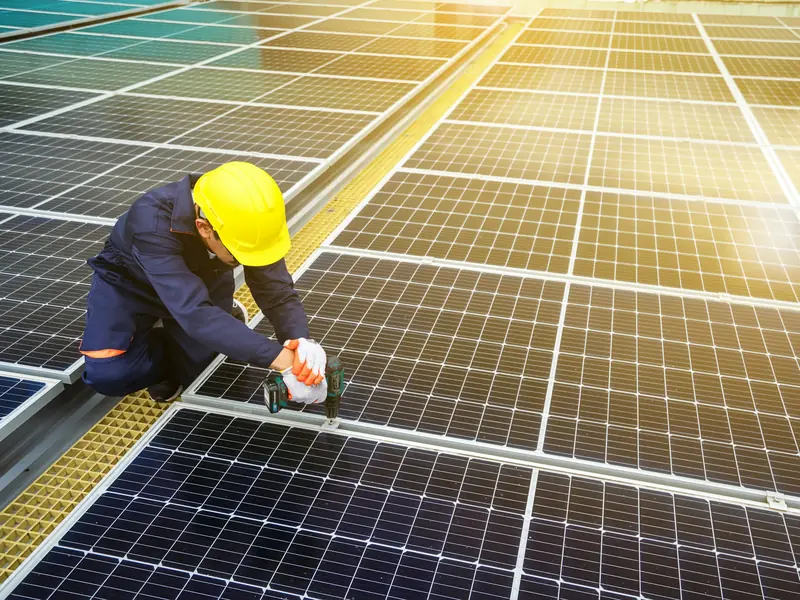
These are industry averages, not our prices or a quote. They come from Solar Choice's published price indexes (links below). Real quotes vary with your roof, switchboard, equipment, installer and date, and the government discounts built into these figures change over time.
Home solar in Sydney
Solar Choice's price index for October 2026 lists the average fully installed price of a standard-quality system in Sydney. The figures already have the federal solar (STC) discount taken off and include GST, so they're what a customer pays.
| System size | Average installed price, Sydney (Oct 2026) |
|---|---|
| 3 kW | $3,670 |
| 4 kW | $4,270 |
| 5 kW | $4,990 |
| 6 kW | $5,750 |
| 7 kW | $6,450 |
| 10 kW | $8,780 |
Source: Solar Choice Price Index, October 2026. Index sizes don't include 6.6 kW, a common size, so we haven't guessed a figure for it.
Two things to keep in mind. Solar Choice says its index uses standard offers because those are the most commonly chosen, and that premium offers from its installer network sit about 20 to 30% higher because of the equipment. And the federal discount shrinks each year to 2030, which pushes the price you pay up if nothing else changes. Our rebates guide explains how that works.
Home batteries
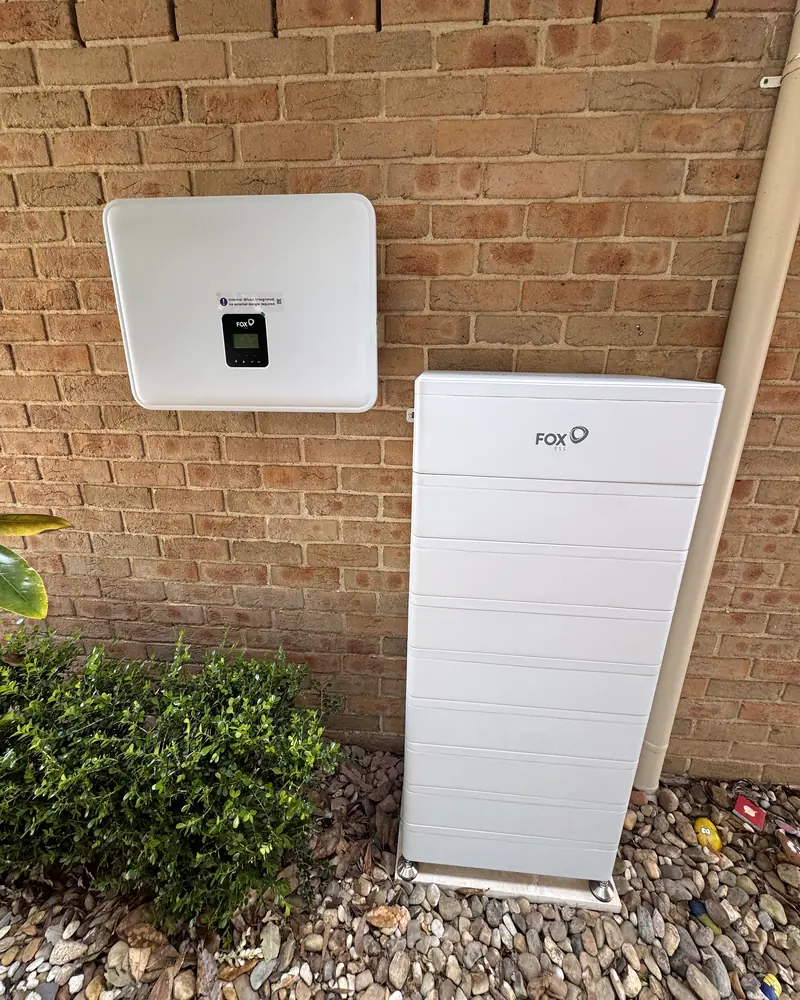
Solar Choice's battery price index (August 2026) lists average installed prices after the federal Cheaper Home Batteries discount, including GST. "Battery only" is for a house that already has a hybrid or battery-ready inverter, or one being installed with the battery. "Battery plus inverter" covers adding a battery to an existing solar system that needs an extra inverter.
| Usable capacity | Battery only | Battery plus inverter |
|---|---|---|
| 10 kWh | $7,784 | $8,284 |
| 20 kWh | $14,972 | $15,772 |
| 30 kWh | $22,489 | $23,089 |
Source: Solar Choice Battery Price Index, August 2026 (national averages across its installer network, not Sydney-specific). It doesn't publish a 13.5 kWh figure, so we haven't listed one.
Solar Choice notes that the cost per kWh stays fairly flat as batteries get bigger, because the federal discount per kWh falls as the capacity rises. Bigger isn't automatically better value. If you also join a virtual power plant, the NSW incentive isn't counted in these averages.
Commercial solar
The same index publishes commercial averages. For Sydney in August 2026, after STCs and including GST:
| System size | Average installed price, Sydney (Aug 2026) |
|---|---|
| 10 kW | $9,640 |
| 30 kW | $27,920 |
| 50 kW | $49,480 |
| 70 kW | $62,910 |
| 100 kW | $88,850 |
Source: Solar Choice commercial price index, August 2026.
Commercial sites vary a lot, so treat these as a rough guide only. Items such as ground mounting, protection equipment, meter changes and network connection studies are the kind of thing that can sit outside an average, so ask for them to be listed separately in a quote. If you'd rather not pay upfront at all, see how a business solar PPA works.
What changes the price on your roof
- Panel and inverter brand and tier. This is the biggest lever. Warranties and track record differ, and so does the price.
- Roof type and access. Tile roofs, steep or multi-storey roofs and awkward access take more labour than a simple single-storey metal roof.
- Your switchboard and wiring. Older boards sometimes need work before solar or a battery can be connected.
- Single-phase or three-phase supply. This affects the inverter and what the network will allow.
- Battery type and backup. A battery that can run selected circuits in a blackout needs more wiring than one that doesn't. Where it's installed matters too.
- Timing. The federal discounts step down on a schedule, and the discount is set by the installation date.
What a good quote shows
- The system size, the named panels and inverter, and where the panels will go.
- The federal discount as a separate line, with the number of certificates and the price assumed for each.
- Whether the battery quote includes backup, and which circuits it covers.
- The network application and any switchboard work, included or itemised.
- What the warranties cover and who you contact if something goes wrong.
Get more than one quote and compare like with like. A cheaper figure that leaves out things the other quote includes isn't actually cheaper.
Common questions
How much does a 6.6 kW system cost in Sydney?
Solar Choice's October 2026 index lists 6 kW at $5,750 and 7 kW at $6,450 for Sydney (after the federal discount, including GST). It doesn't publish 6.6 kW, so the honest answer is somewhere between those two for a standard-quality system, and higher with premium equipment. Your own quote will be specific.
Do these prices include the government discount?
Yes. The solar prices include the STC discount and the battery prices include the federal Cheaper Home Batteries discount, and both include GST. They don't include any NSW virtual power plant incentive.
Why do quotes for the same size system differ so much?
Mostly equipment tier, roof and switchboard work, and what's included, such as backup, network fees and warranty. Compare line by line.
Will prices go down if I wait?
Equipment costs have generally fallen, but the federal discounts are scheduled to step down every year to 2030, so waiting can cost you part of the discount. We can't predict prices. If timing matters to you, ask us what a delay would change on your specific quote.
Get a price for your place
Send us a recent bill and your address. We'll size a system to your usage and give you a written quote with each item and discount shown.
More guides: NSW solar and battery rebates · How big a solar system do I need? · Is a home battery worth it in NSW? · All guides
Prices from Solar Choice's published indexes (solar October 2026, batteries and commercial August 2026), checked 27 October 2026. Averages only, not offers or quotes from New Day Energy. General information only, not financial advice.